
Vacuum Paddle Mixers & Dryers
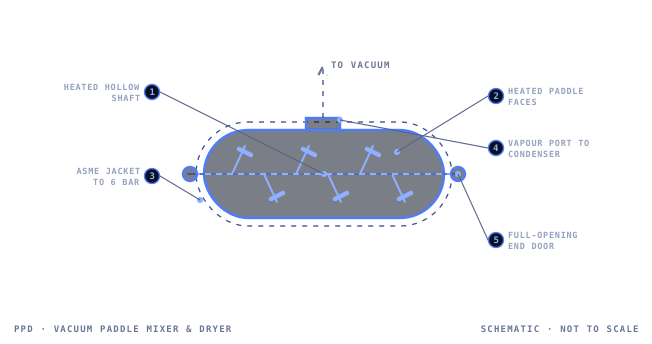
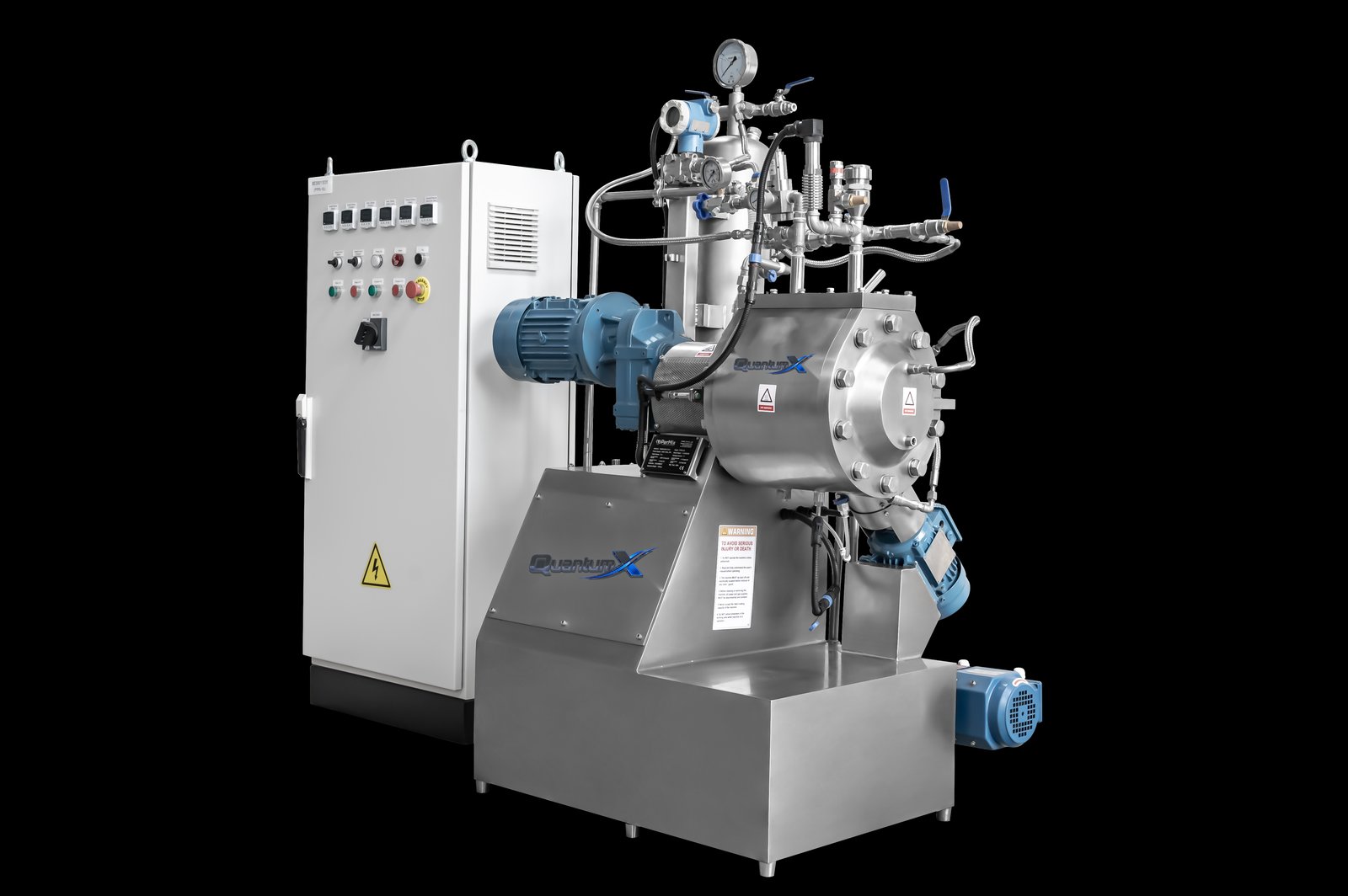
A slow-turning paddle agitator inside a jacketed, vacuum-rated body — the workhorse geometry for drying filter cakes, sludges, wet granules and battery materials. Hollow, heated paddles and shaft turn the agitator itself into heat-transfer surface, so drying rate scales with area, not just jacket size.
The Mixing Action
Gentle Bed Turnover
Wide, low-speed paddles lift and fold the full cross-section without crushing it — handling everything from free-flowing powder to sticky filter cake through the entire drying curve.
Heated Shaft & Paddles
Thermal fluid circulates through the hollow shaft and paddle faces as well as the jacket. Heat-transfer area per litre rises by up to 90% — the single biggest lever on cycle time.
Phase-Change Tolerance
As material dries it passes through a sticky transition phase. Paddle geometry keeps torque available and wall contact renewed exactly where thin-film and tray dryers stall.
Where the PPD Series Earns Its Place
Strengths
- Highest heated-surface-to-volume ratio of any horizontal vacuum dryer
- Handles the wet-to-dry phase change without stalling
- Robust drive sized for sticky transition torque
- Full-opening doors or bomb-bay discharge for cleaning access
- CIP spray bars and ATEX / inert-loop execution available
Typical Duties
- Filter cake and centrifuge cake drying
- Battery precursor and cathode material drying with NMP recovery
- Chemical intermediates, pigments and catalysts
- Sludge conditioning and solvent stripping
- API and fine-chemical final drying
Industries
- Specialty chemicals
- Battery & energy materials
- Pharmaceutical & API
- Food ingredients
- Environmental / recycling
Standard sizes, working volumes, heated areas and installed power for the PPD Series are issued as an engineering datasheet, matched to your material. Request the PPD datasheet »
Traditional paddle dryers are sold on volume. QuantumX quotes them on the numbers that set your cycle: heated area per litre, jacket and shaft fluid temperatures, evaporation rate at your vacuum level, and the torque reserve through the sticky phase — all validated on your material before the order is written.
Mix, Dry, React — One Vessel, Under Vacuum
At 10–100 mbar absolute, water boils between 7 °C and 46 °C — so heat-sensitive product dries at temperatures a conventional dryer cannot approach. Every QuantumX vacuum machine shares the same engineering: ASME jackets, vacuum-rated bodies, closed-loop solvent recovery, nitrogen back-fill for oxygen-free processing, and product-temperature control with full batch data logging. How vacuum drying works »
One Vessel, Three Duties
Mix, react or granulate, then dry to spec — no transfer, no loss, no re-segregation.
Solvent Recovery
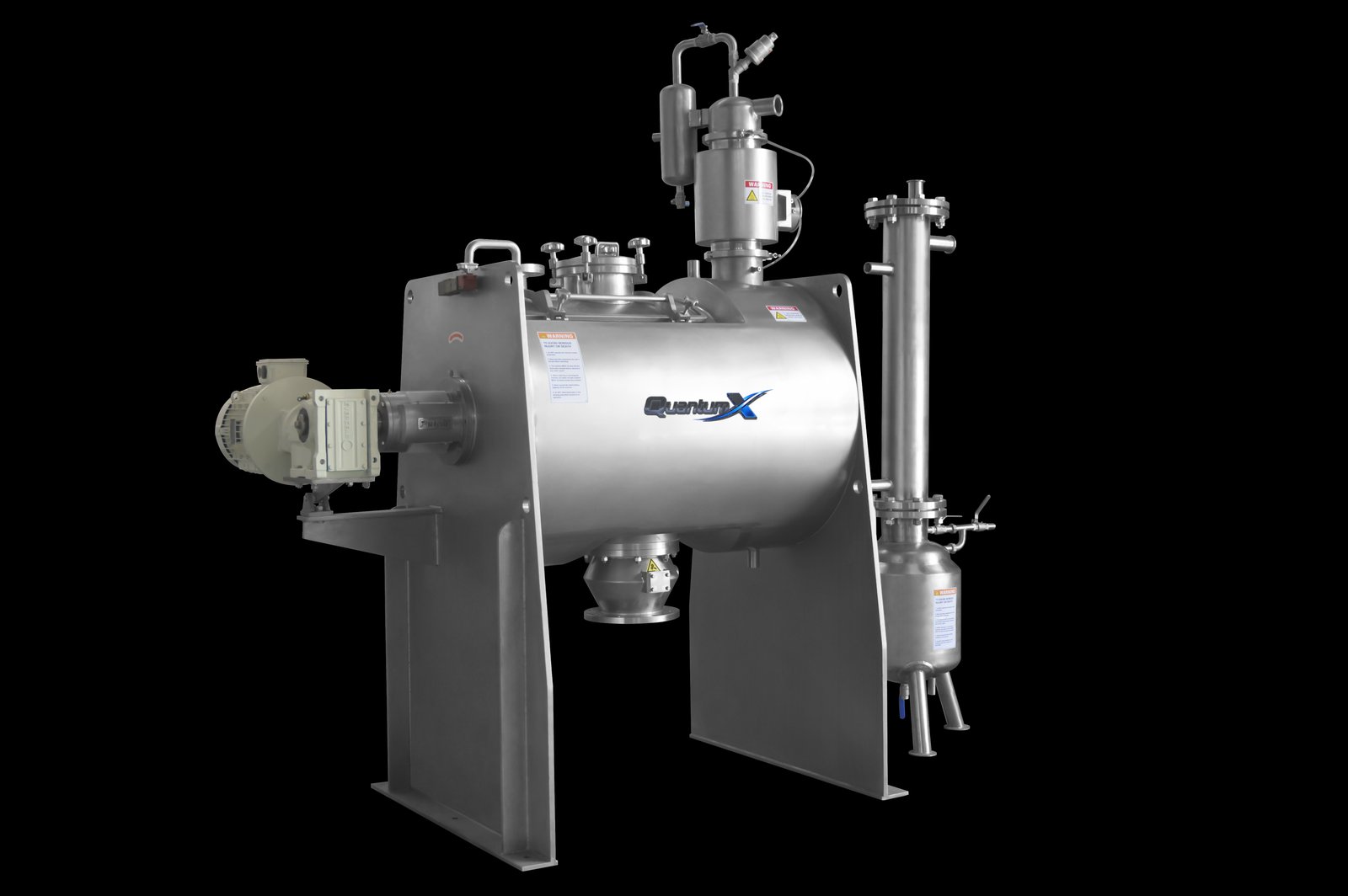
Condenser, receiver and cold trap sized to the duty; solvents come back as liquid.
Oxygen-Free
Evacuate and back-fill with N₂; ATEX and inert-loop control available.
Validated Cycles
Drying curve and endpoint measured in trial, warranted at FAT.
Paddle mixers are also built as standard atmospheric mixers — the same engineered geometry, jacket options and trial validation, without the vacuum train. Specify at enquiry.
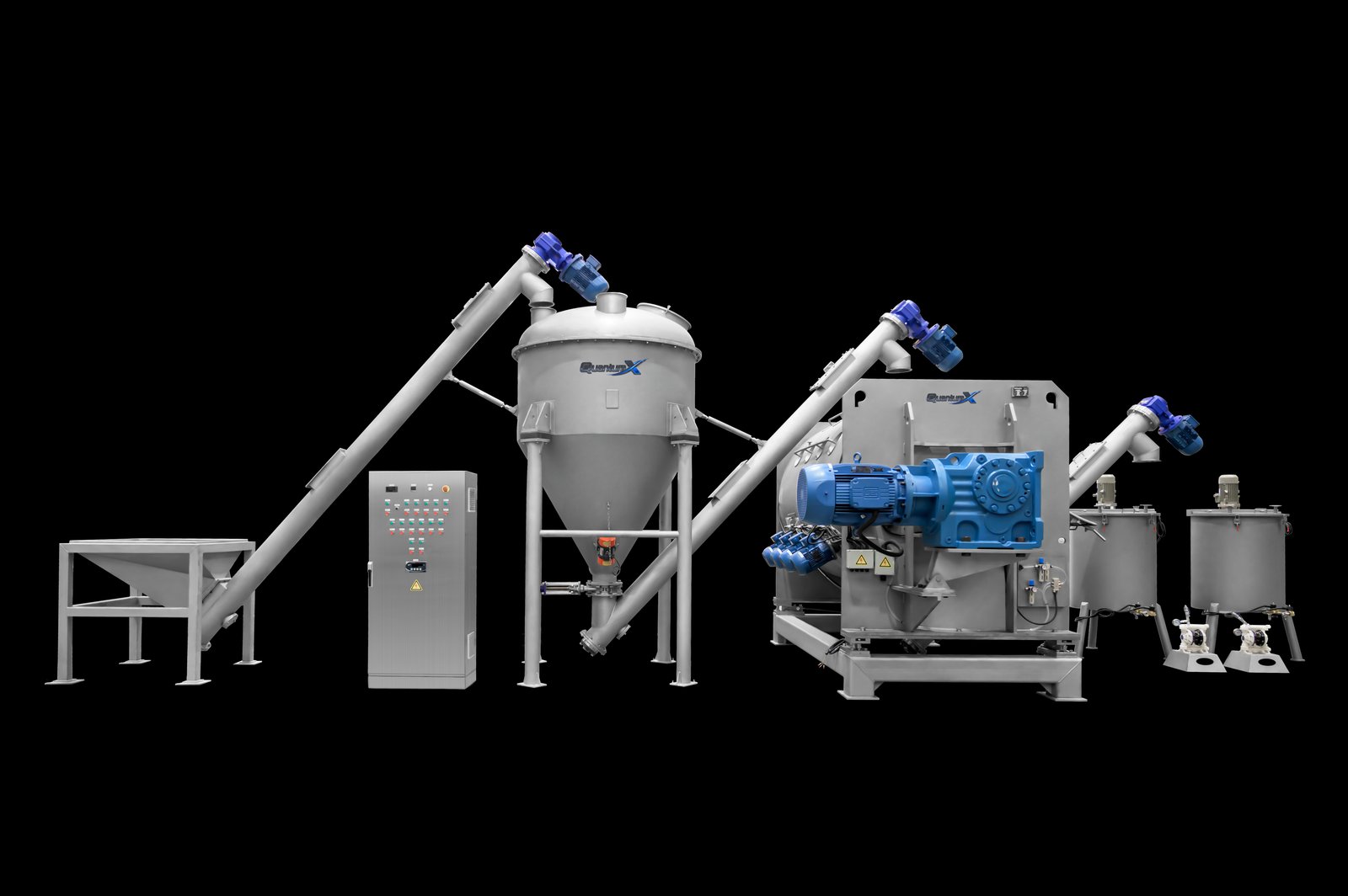
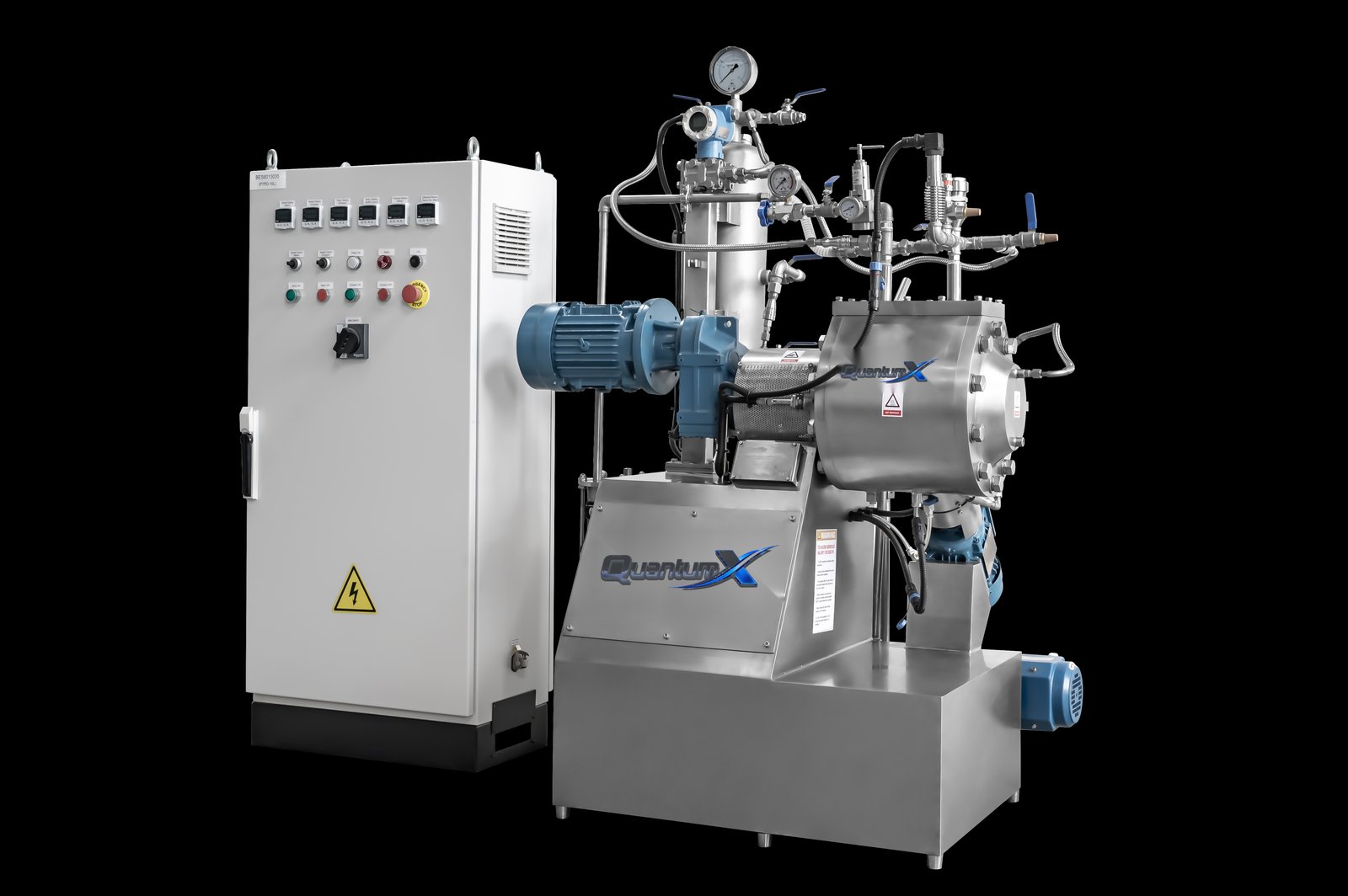
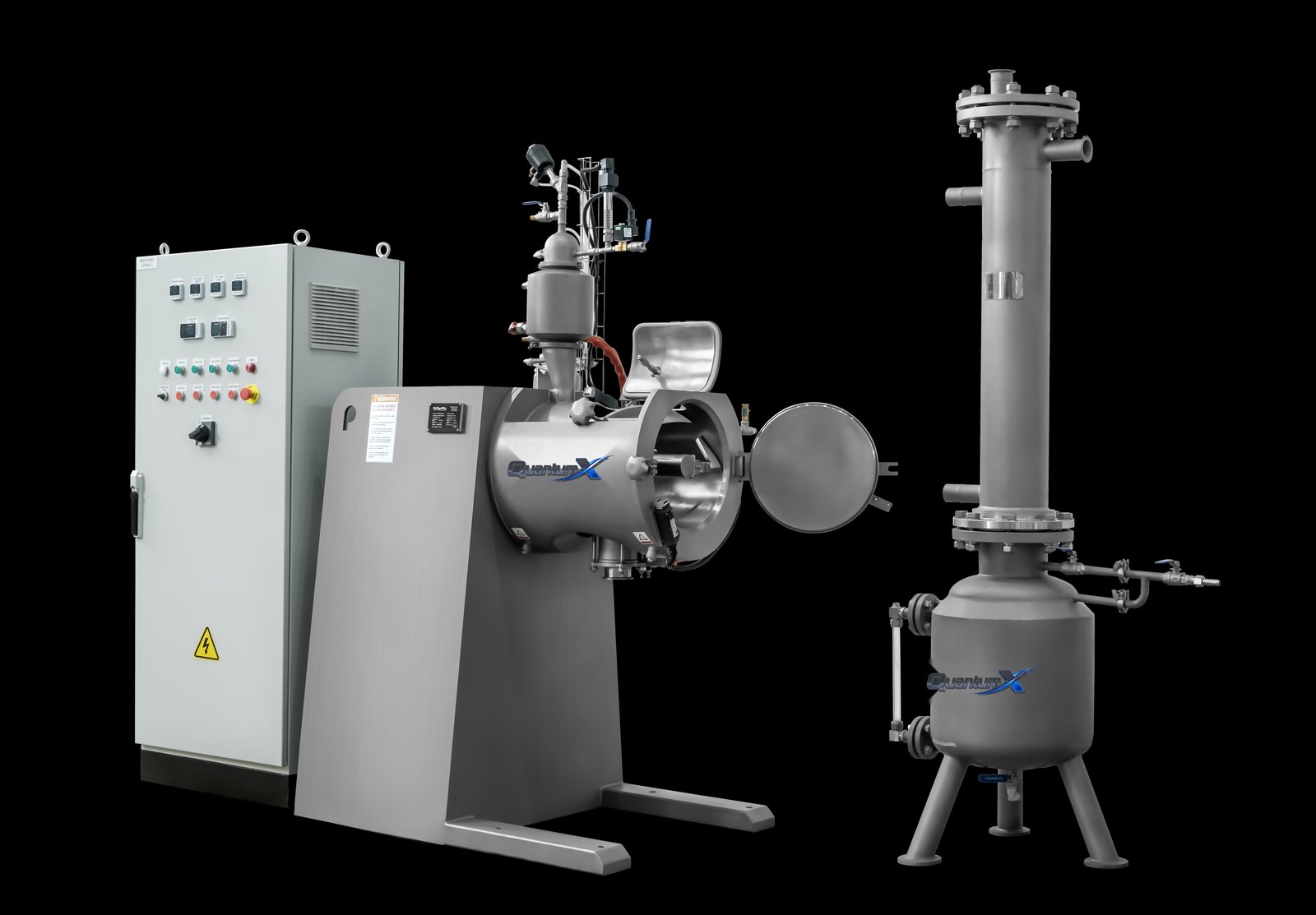
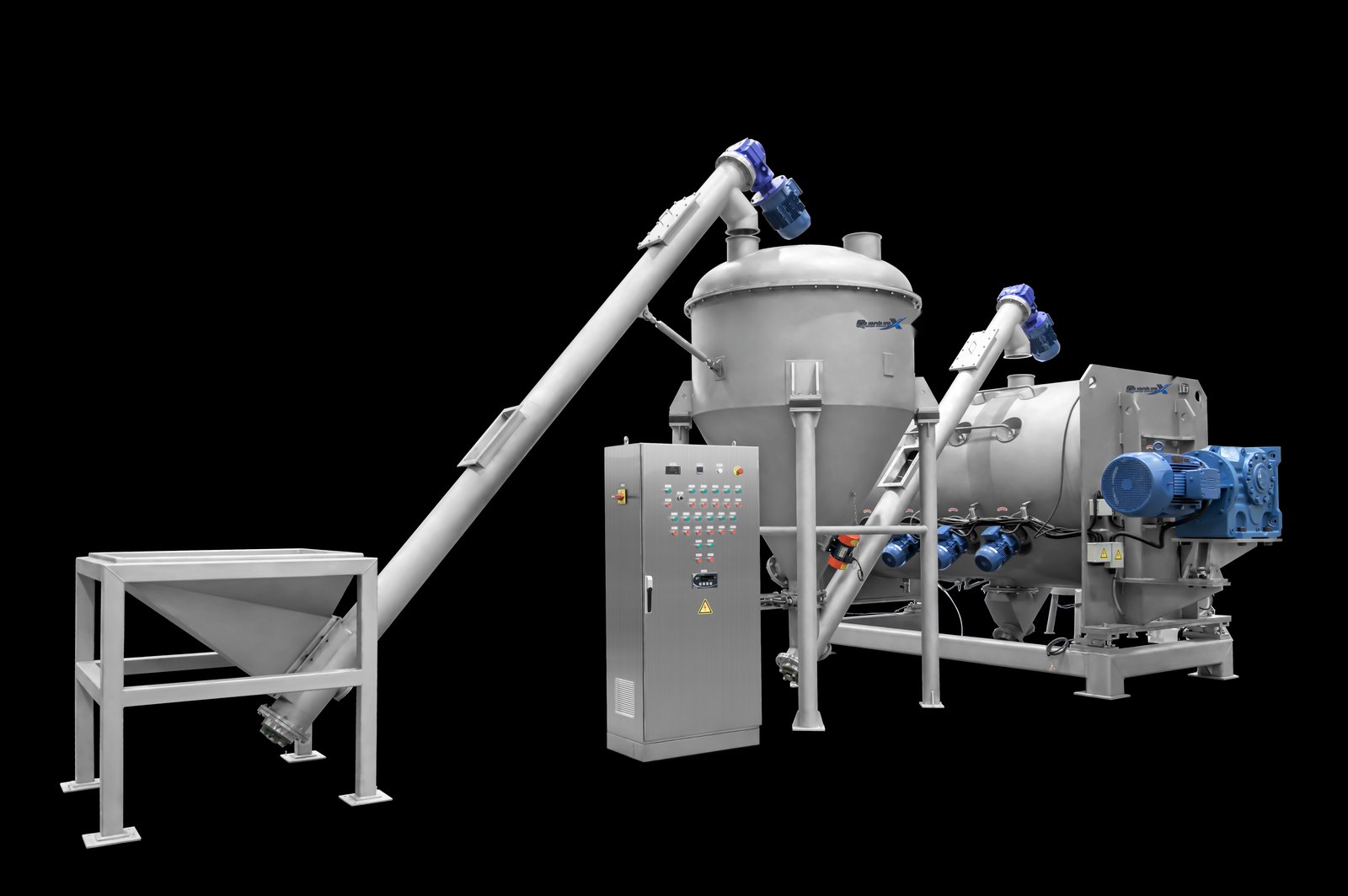
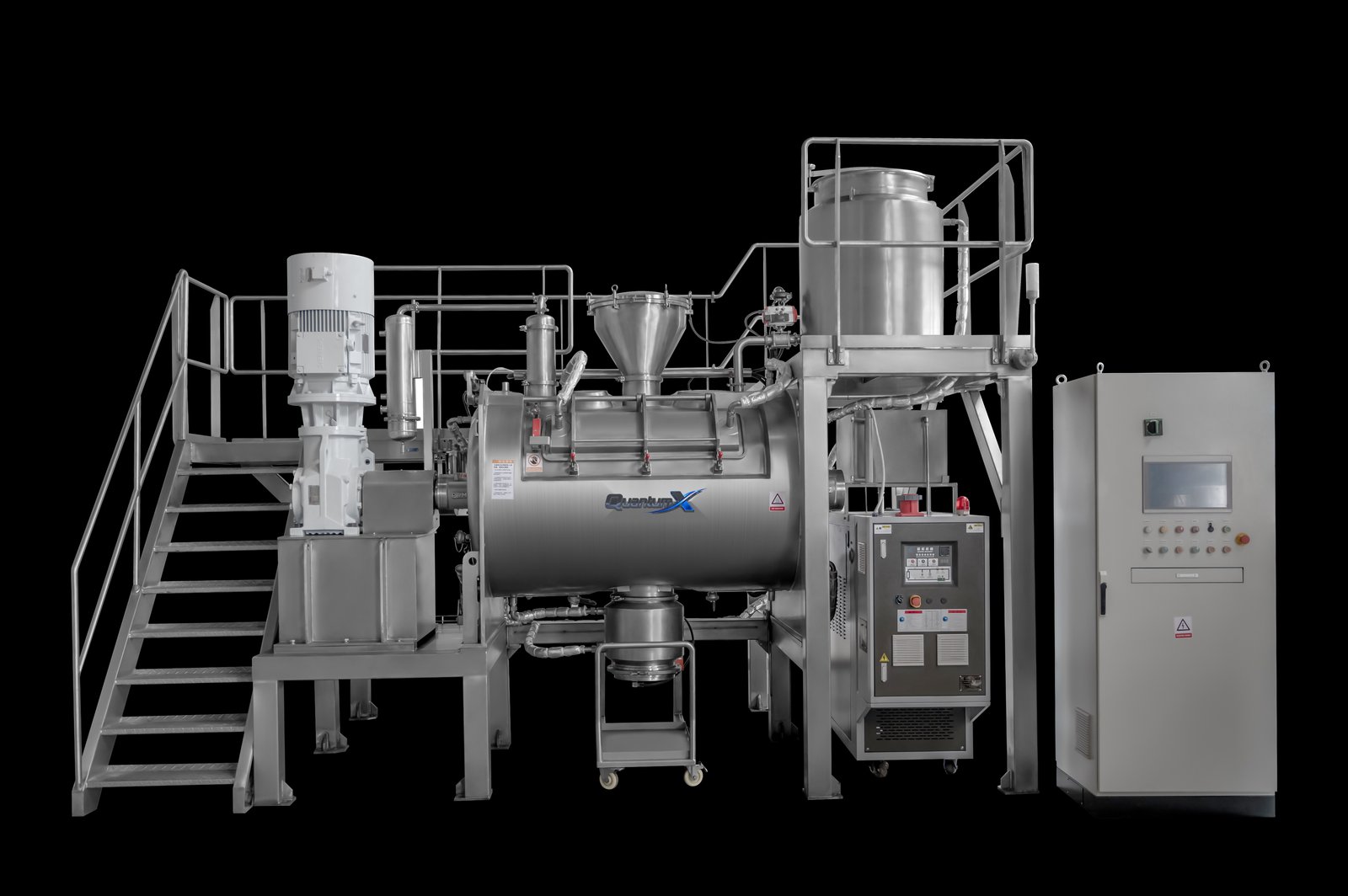
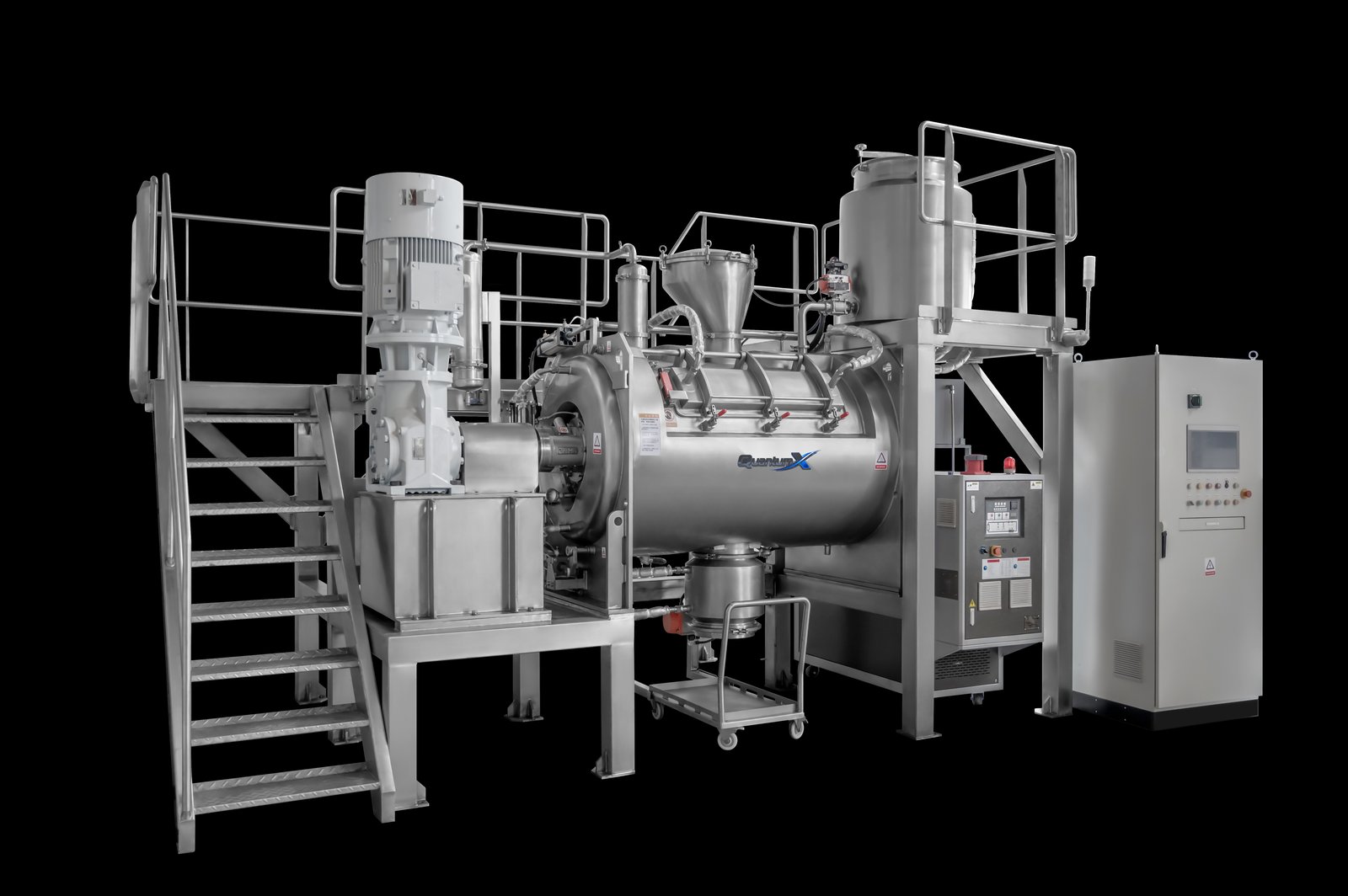
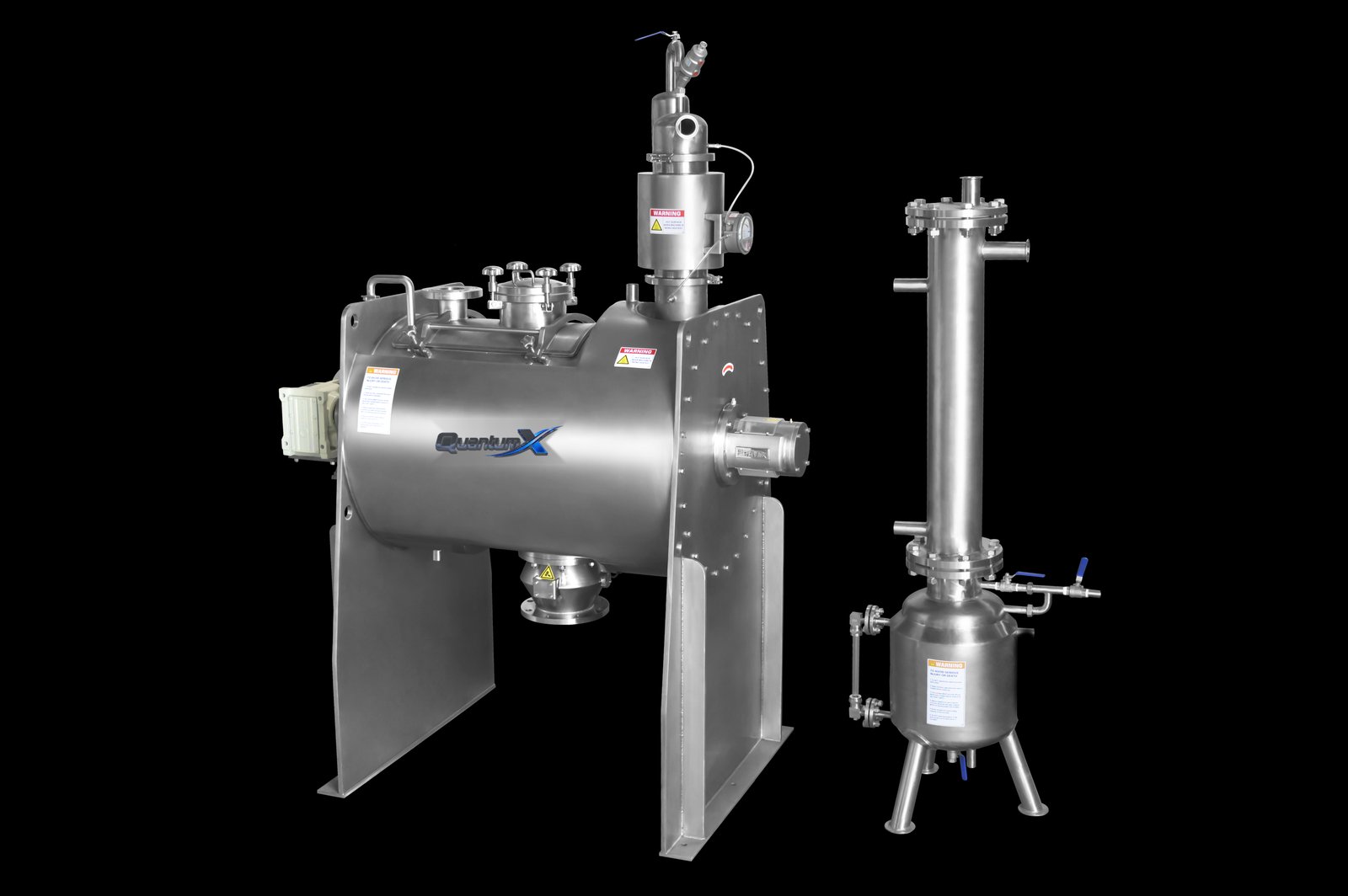
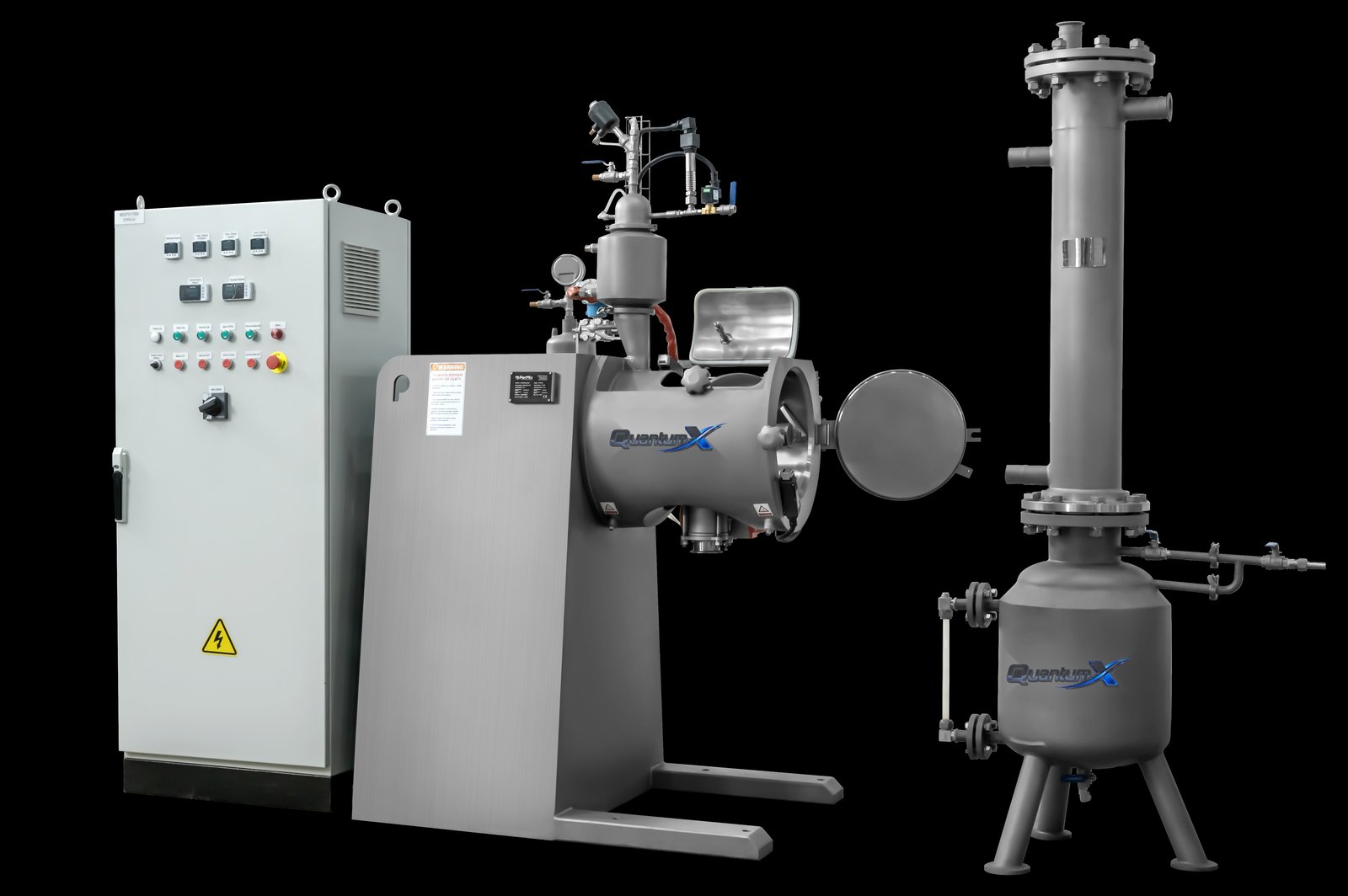
In the Shop & In the Field
Paddle Mixer Dryers, Answered
What is a vacuum paddle dryer used for?
Drying wet cakes, sludges and granules that pass through a sticky phase — filter cakes, battery materials, pigments, APIs. The heated paddle agitator keeps the bed moving and renews wall contact where static and thin-film dryers stall.
Why heat the shaft and paddles, not just the jacket?
In a powder bed conduction is slow, so drying rate is set by heated area in contact with product. Hollow-shaft and heated-paddle execution raises area per litre by up to 90%, cutting cycle time roughly in proportion.
Can a paddle dryer recover solvent?
Yes — a condenser, receiver and cold trap on the vapour line recover solvents as liquid for reuse. NMP recovery on battery duties is a standard configuration.
Explore the full range: all vacuum powder mixers & dryers »
Prove It on Your Material First
Pilot trial, your product, measured drying curve and blend data — then geometry, thermal and vacuum scope fixed, and FAT against the same criteria.
Request a Quote